

Imagine a world in which every single human being can freely share in the sum of all knowledge.
The Wikimedia projects make up one of the world’s largest repositories of human knowledge. With that much information, someone is bound to get upset by some of the content from time to time. While the vast majority of content disputes are resolved by users themselves, in some extreme cases the Wikimedia Foundation may receive a legal demand to override our users.
The Wikimedia projects are yours, not ours. People just like you from around the world write, upload, edit, and curate all of the content. Therefore, we believe users should decide what belongs on Wikimedia projects whenever legally possible.
Below, you will find more information about the number of requests we receive, where they come from, and how they could impact free knowledge. You can also learn more about how we fight for freedom of speech through our user assistance programs in the FAQ.
This report covers requests we received between July and December, 2019. For historical data, please see our past reports.
Alteration and takedown requests from governments
Requests for content alteration and takedown
| Government requests | 11 |
| Other | 270 |
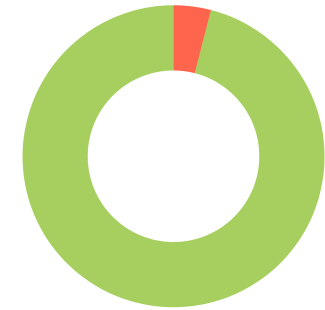
Government requests breakdown
| Country | Entity | Requests |
|---|---|---|
| Belgium | Cabinet Office | 1 |
| Ecuador | Executive Office | 1 |
| India | Local Police State Police | 1 1 |
| Japan | Local Administrative Agency State Police | 1 1 |
| Norway | Politicians, Candidates, and Political Parties | 1 |
| Spain | Politicians, Candidates, and Political Parties | 1 |
| Taiwan | Diplomatic Official | 1 |
| Ukraine | Diplomatic Official | 1 |
| United States of America | Military Office | 1 |
Requests for content alteration and takedown by project
| Project Affected | Requests | Granted |
|---|---|---|
| English Wikipedia | 83 | 0 |
| Wikimedia Commons | 35 | 0 |
| German Wikipedia | 24 | 0 |
| French Wikipedia | 20 | 0 |
| Not a Wikimedia Site | 18 | 0 |
| Multiple Projects | 12 | 0 |
| Spanish Wikipedia | 12 | 0 |
| Russian Wikipedia | 9 | 0 |
| Japanese Wikipedia | 6 | 0 |
| Portuguese Wikipedia | 5 | 0 |
| Italian Wikipedia | 4 | 0 |
| Dutch Wikipedia | 3 | 0 |
| Wikidata | 3 | 0 |
| Chinese Wikipedia | 2 | 0 |
| Arabic Wikipedia | 1 | 0 |
| Croatian Wikipedia | 1 | 0 |
| Danish Wikipedia | 1 | 0 |
| Esperanto Wikipedia | 1 | 0 |
| Farsi Wikipedia | 1 | 0 |
| Finnish Wikipedia | 1 | 0 |
| German Wiktionary | 1 | 0 |
| Indonesian Wikipedia | 1 | 0 |
| Lithuanian Wikipedia | 1 | 0 |
| Lithuanian Wikipedia | 1 | 0 |
| Polish Wikipedia | 1 | 0 |
| Romanian Wikipedia | 1 | 0 |
| Thai Wikisource | 1 | 0 |
| Unknown | 31 | 0 |
Requests for content alteration and takedown by country
| Country of Origin | Requests | Granted |
|---|---|---|
| United States of America | 34 | 0 |
| Germany | 28 | 0 |
| France | 22 | 0 |
| United Kingdom | 11 | 0 |
| Australia | 9 | 0 |
| India | 8 | 0 |
| Italy | 5 | 0 |
| Japan | 5 | 0 |
| Brazil | 4 | 0 |
| Canada | 4 | 0 |
| Russia | 4 | 0 |
| Israel | 3 | 0 |
| Spain | 3 | 0 |
| Switzerland | 3 | 0 |
| Thailand | 3 | 0 |
| Argentina | 2 | 0 |
| Belgium | 2 | 0 |
| Lithuania | 2 | 0 |
| Netherlands | 2 | 0 |
| Poland | 2 | 0 |
| Austria | 1 | 0 |
| Azerbaijan | 1 | 0 |
| Bangladesh | 1 | 0 |
| Colombia | 1 | 0 |
| Croatia | 1 | 0 |
| Denmark | 1 | 0 |
| Ecuador | 1 | 0 |
| Finland | 1 | 0 |
| Hungary | 1 | 0 |
| Kazhakstan | 1 | 0 |
| Norway | 1 | 0 |
| South Korea | 1 | 0 |
| Sweden | 1 | 0 |
| Taiwan | 1 | 0 |
| United Arab Emirates | 1 | 0 |
| Unknown | 108 | 0 |
Correction: In early 2019, the Wikimedia Foundation removed a portion of an article’s revision history due to a court order in Germany. The initial request was included in a previous edition of our transparency report as a takedown request that was not granted; however, following litigation, the Foundation was ordered to comply the following year. Further details are available on our blog.
Right to Erasure

The Right to Erasure, or Right to be Forgotten, is a right under the laws of various countries that allows individuals to request that certain information relating to them be delisted or removed.
When we receive a Right to Erasure request regarding project content, we first direct the requester to experienced project volunteers, who routinely handle most requests to change content on the projects. Wikimedia projects have guidelines for content about living persons, and the volunteer community can review the guidelines and work with the requester to address their concerns. During this reporting period, we received 11 requests to alter or takedown project content based upon the Right to Erasure.
When we receive a request relating to a user account, we provide the user information on the community-driven vanishing process. See the account-related requests section below for more detail on these requests.
We believe in a Right to Remember. Everyone should have free access to relevant and neutral information of public concern; delisting and removing such content from the internet harms our collective ability to remember history and understand the world. In October 2016, we filed a petition to intervene in Google’s appeal of a French administrative order that would expand such delistings from the European Union to all global domains. In March 2020, following a ruling by the European Court of Justice limiting the geographic scope of such removals, the French court quashed the order, and the French agency behind it has adjusted its position.
* Please note that this information only reflects requests made directly to us. Wikimedia project pages continue to disappear from search engine results without any notice or request to us. We have a dedicated page where we post notices of delisted project pages that we have received from the search engines who provide such information as part of their own commitments to transparency.
Account related requests
Many of the requests we receive ask for changes to project content, or request that we provide data about our users. However, some requests pertain to user accounts.
Account deletion
When we receive a request to delete a user’s account, we provide the user information on the community-driven vanishing process. Prior to July 2019, account deletion requests were reported in the “Right to Erasure” section. We are now reporting these requests separately in order to give users additional clarity on the types of requests we receive.
Unblock Requests
On occasion, a user who has been blocked by the community may contact the Foundation to request that we take action to reverse the block. The Foundation supports the community’s ability to issue blocks in order to protect users and the projects, and appeals to us when a user has been blocked for disruptive behavior will not result in reinstatement.
Photo credits


Bobby Shabangu and Michał Buczyński
JPC Photography and Jason Krüger for Wikimedia
